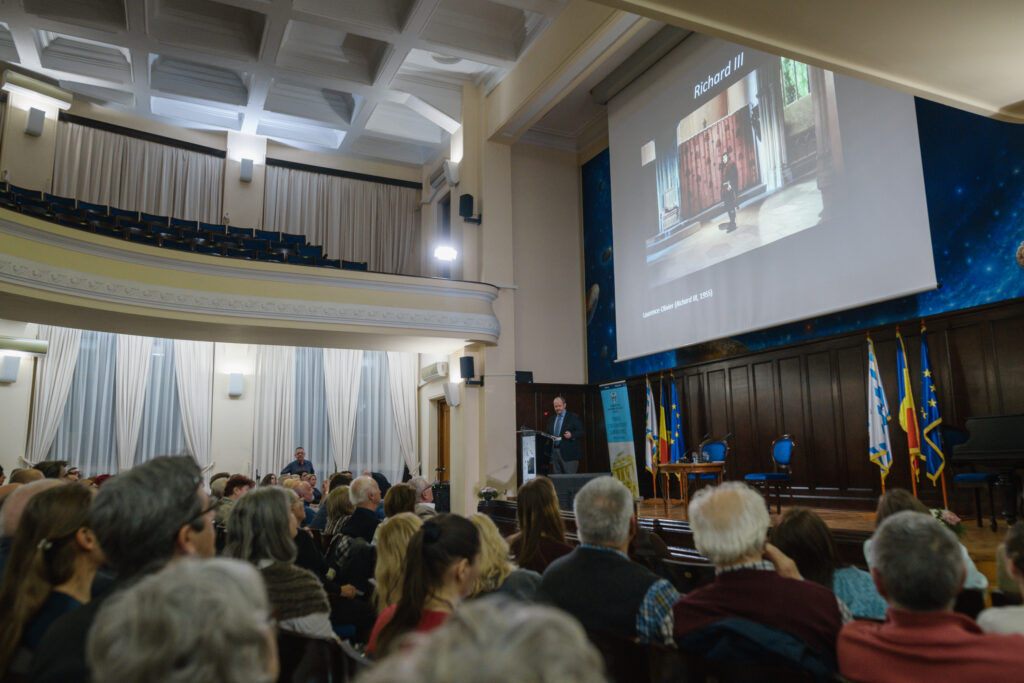
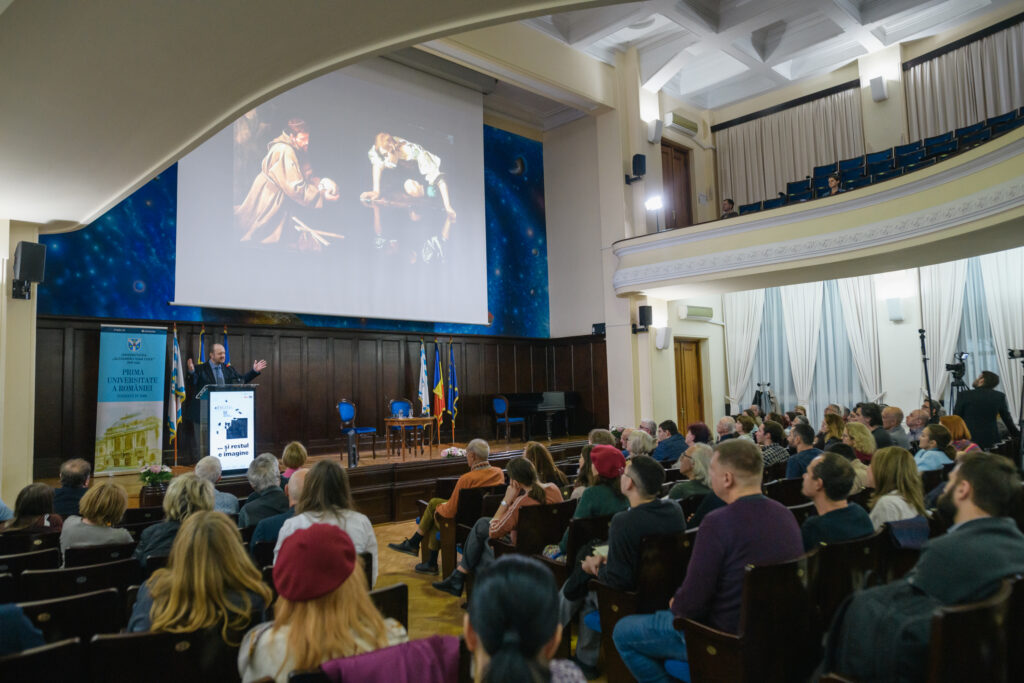
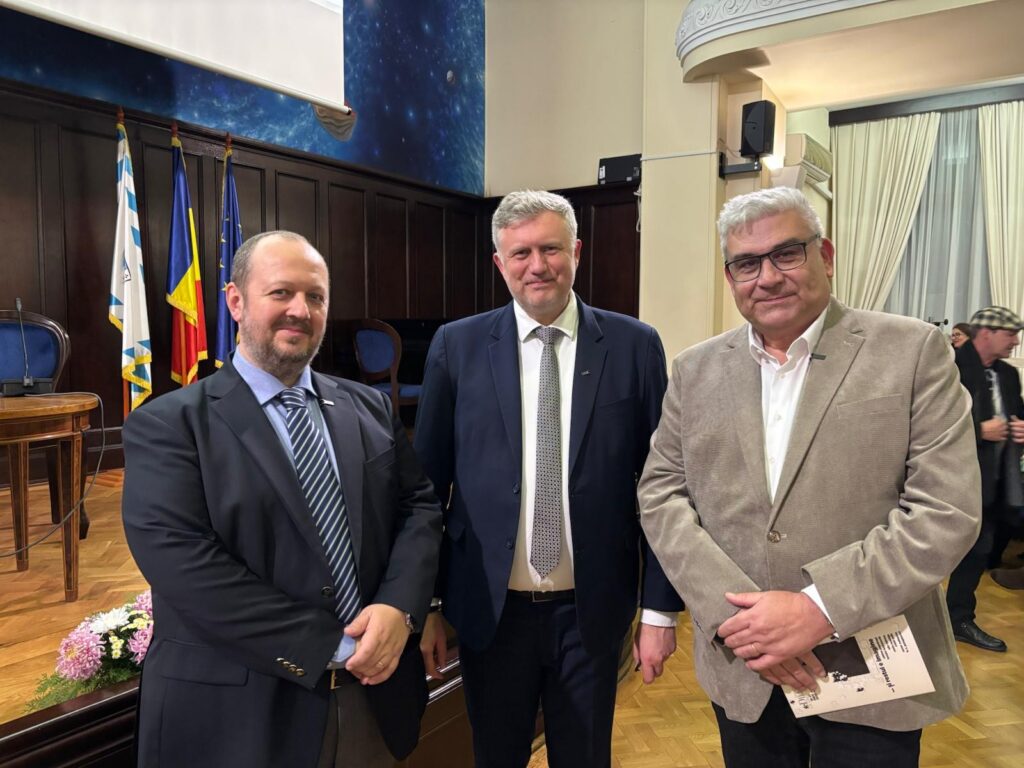
On 19 November 2026, Prof. Adrian Papahagi gave a talk on Shakespeare in the Aula Magna of the „Alexandru Ioan Cuza” University of Iași (UAIC). The address opened the Dilema conferences hosted by UAIC. This is the abstract of the talk:
Images of the Self in Shakespeare (and beyond)
Man is created in God’s image (Gen. 1:27): ad imaginem suam (Vulgate), kat’ eikóna theoû (Septuagint). In both ancient languages, imago and eikon mean ‘imitation’, ‘representation’, or even ‘phantom’. How can theatre—a representation of imitation—reveal to us the inner image of man, which we cannot even see when looking in the mirror? The actor was called hypokrites in Greek (‘he who looks from behind a mask’), and persona in Latin (‘he whose voice resounds through a mask’). By concealing the actor’s chance appearance, the mask reveals the image of eternal man. ‘Is man no more than this?’, asks Lear (III.iv). But what is a human being? What image do we form of ourselves? What image do others form of us? And, above all, is it even possible to discern the true image/icon/face of a human being beyond masks and roles? What lies beyond names, beyond reputation, beyond the hypocrisy of the public image?